AI, Old Videos and False Claims Shape the Online Narrative of the Israel–Iran Conflict

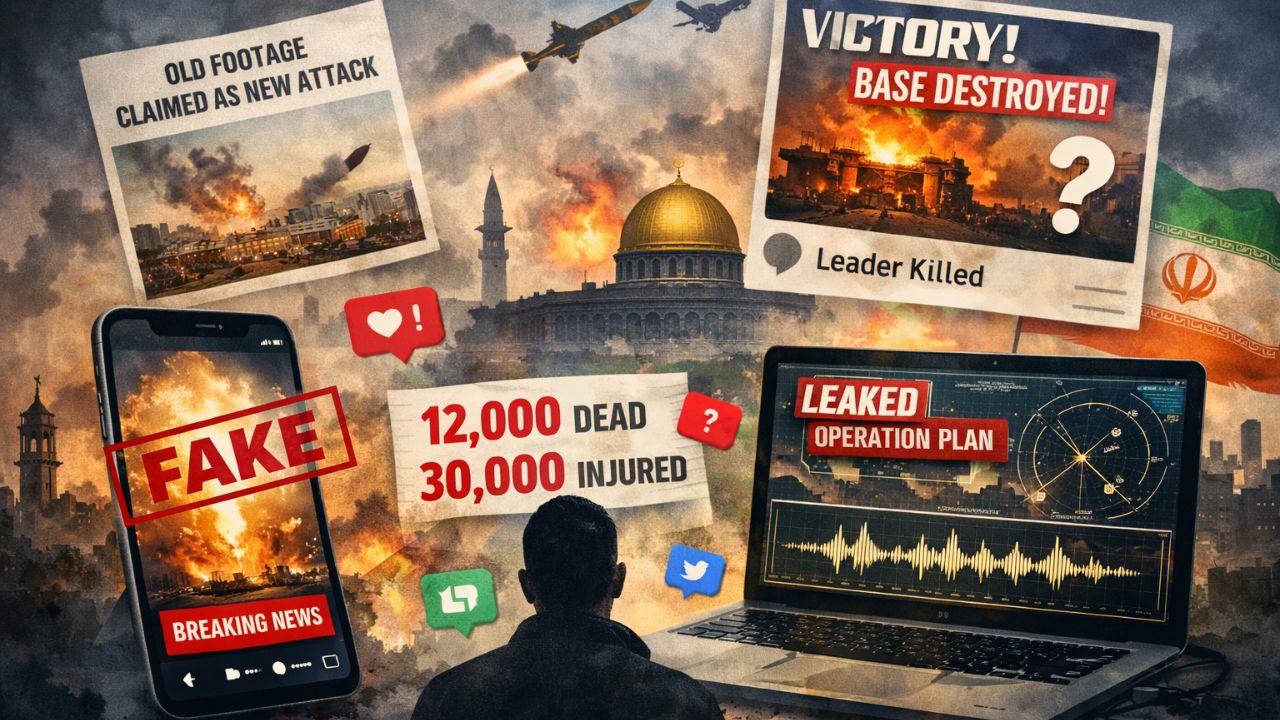
The earliest images of the escalating Israel–Iran confrontation did not come from official briefings or field reporters, but from social media — where fact, fiction and artificial intelligence now compete for attention.
As military tensions between Israel, Iran and their allies escalate across the Middle East, a parallel battle is unfolding online — one driven by artificial intelligence, recycled footage and fabricated narratives that blur the line between fact and fiction.
Social media platforms have been flooded in recent days with dramatic videos, images and claims purporting to show missile strikes, air defense interceptions and large-scale destruction. Many of these posts have gone viral within minutes. A growing number, however, are either misleading, manipulated or entirely false.
News organizations and researchers tracking the information ecosystem say the current conflict marks one of the most intense examples yet of how AI-assisted misinformation can spread during real-time military events.
A Digital Fog of War
Unlike previous conflicts, much of the imagery circulating now is either:
-
Generated using artificial intelligence tools
-
Taken from older conflicts and falsely labelled
-
Extracted from video games or simulations
-
Edited to exaggerate damage or outcomes
Some videos claiming to show Iranian missile strikes on Israeli cities were later traced to unrelated events or digital simulations. Others reused footage from past conflicts in Gaza, Syria or Ukraine, repackaged as “breaking news.”
The speed of circulation has made verification difficult, even for experienced journalists.
Five Dominant False Narratives
Researchers and fact-checking groups have identified several recurring forms of disinformation dominating social platforms:
1. Fabricated Strike Footage
AI-generated clips depicting large-scale explosions, missile launches or air-defense interceptions have been widely shared, often without context or sourcing.
In one prominent example, a viral post falsely claimed that a critical Israeli nuclear facility had been destroyed, accompanied by dramatic visuals later identified as digitally generated or manipulated. No official or independent confirmation supported the claim.
Other AI-generated videos, accompanied by emotionally charged captions in multiple languages, were circulated as evidence of the conflict reaching a decisive phase, despite lacking any verifiable location or metadata.
BREAKING: Israel.’s Nuclear reactor power plant has been destroyed by multiple Iranian ballistic missiles, leaking radioactive materials… pic.twitter.com/KzaQvm9iHL — Idris (@7signxx) March 2, 2026
AI genrated videos of war
युद्ध अपने चरम पर pic.twitter.com/aZVSbOthsf — Ashok Shera (@ashokshera94) March 2, 2026
2. Old Videos Presented as New Attacks
Footage from conflicts years old has also been relabelled as current, exploiting public unfamiliarity with military imagery.
Several posts claimed to show new Iranian strikes using advanced weaponry, but the accompanying videos were later identified through reverse-image searches as footage from unrelated explosions, including a 2017 ammunition depot blast in Ukraine.
Such clips were often reshared with increasingly alarmist captions, giving the false impression of escalation.
🚨 IRAN ESCALATES WITH FEAR WEAPONS — THERMOBARIC STRIKES REPORTED Alarming reports are emerging that Iranian IRGC forces have deployed thermobaric munitions — devastating weapons designed to create massive blast waves and extreme heat over wide areas — against Israeli targets.… pic.twitter.com/F7OqyYxYrT — Jim Ferguson (@JimFergusonUK) March 2, 2026
How a False Dubai Video Became Part of the Israel–Iran Information War
Not all misleading content originated from deliberate fabrication.
Some widely circulated videos showed ordinary civilian or infrastructural activity — including scenes from cities such as Dubai — that were falsely linked to the conflict. In multiple cases, residents and independent observers later explained that the footage had no connection to military events.
These incidents highlight how confusion and speculation can fuel misinformation even without coordinated intent.
If fake, this video highlights the dangers of deepfakes and manipulated media. Stay alert.#IranWar #الخرج #Dubai #Israel https://t.co/5vVeT6vpQp — Stephanie Carrillo (@StephanieCarrlo) March 2, 2026
Fake video from dubai
If fake, this video highlights the dangers of deepfakes and manipulated media. Stay alert.
If fake, this video highlights the dangers of deepfakes and manipulated media. Stay alert.#IranWar #الخرج #Dubai #Israel https://t.co/5vVeT6vpQp — Stephanie Carrillo (@StephanieCarrlo) March 2, 2026
Read Latest News and Breaking News at The Newsman, Browse for more World News