Mumbai AQI Emergency: Doctors Warn of Severe Mental and Physical Health Risks from This Invisible Danger


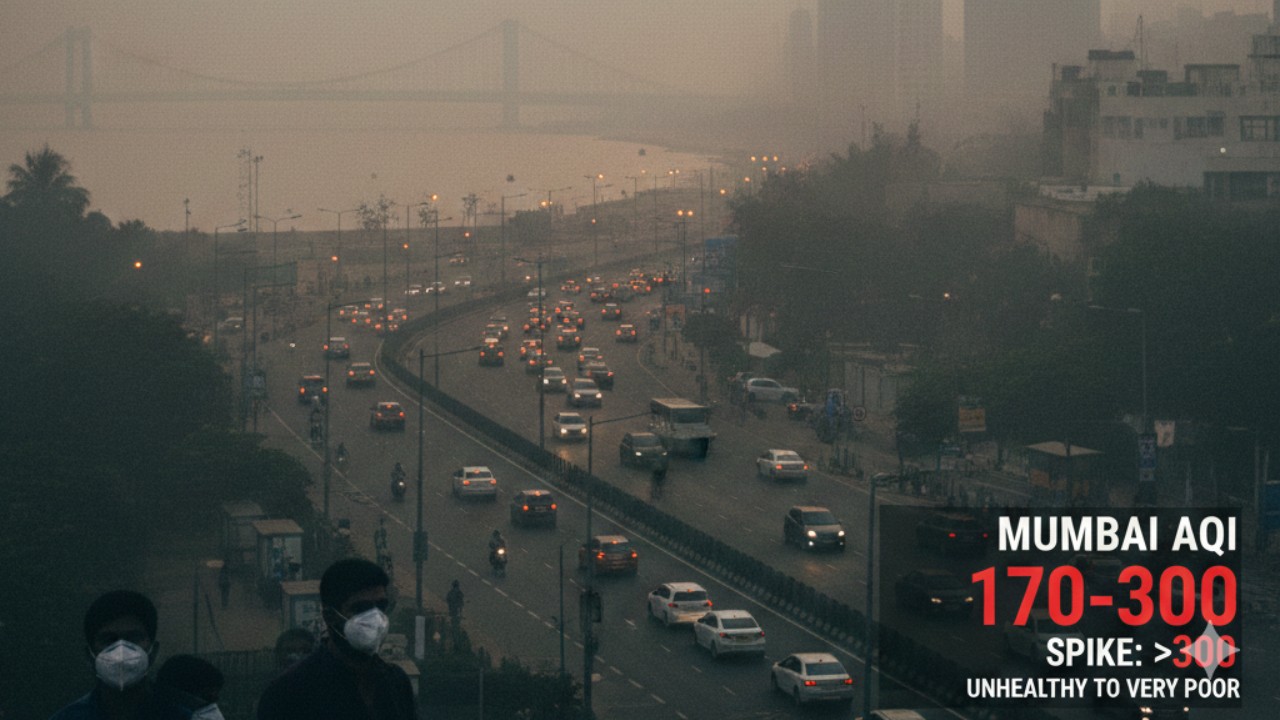
The month of November is when the city of Mumbai awaits its mildly chilly mornings, as winter begins to grace it in subtle ways. However, this year, a grey chemical haze has blurred the blue horizons of the Arabian Sea. Mumbai’s Air Quality Index (AQI) has fluctuated between unhealthy and extremely poor levels over the past few weeks. The AQI has been consistently hovering in the 170–300 range, and in areas like BKC, Mazgaon, Borivali, and others, levels even spiked beyond 300. What was once considered Delhi’s problem has now choked the city of dreams, and the situation is deeply concerning.
A mix of construction dust, vehicular emissions, industrial pollution, and stagnant winter air has led to this alarming decline in air quality. Together, these factors have not only turned the city into a gas chamber but have also begun affecting citizens’ health. While one might assume that such hazardous AQI levels impact only physical health, the effects on mental well-being are equally severe.
The News Man spoke to two professionals, a doctor and a psychologist, to understand the seriousness of Mumbai’s current AQI range and how it is adversely affecting everyone.
Consultant psychotherapist Barkha Patel-Tanna highlighted the invisible mental toll poor air quality can have on people. Barkha stated, “Mumbai is a city that never stops. But such AQI levels cause an invisible pause. The harmful air people are inhaling can trigger stress and affect their moods, mostly making them feel low and confused. Furthermore, such climate conditions can exacerbate mental health challenges for individuals already grappling with internal struggles.
Barkha added, “People think pollution is just a physical threat, and its psychological impact is ignored. Mental health discussions are not yet widespread or open in India. But one needs to understand that the mind and body do not function in isolation. If a person breathes unhealthy air, its harmful effect is felt not only on the lungs but also on emotions, cognition and overall mental balance. Citizens have no idea how concerning it is; it affects the oxygen flow to the brain. But it can be noticed with smaller but quite crucial signs like difficulty concentrating, slower processing of information, and reduced productivity. The people who are at major risk are children and elderly people, as polluted air can interfere with learning, attention and memory. One also needs to understand how the toxins in the air can activate the body’s stress response, triggering the fight-and-flight mode. It’s not pure oxygen; it is mixed with several harmful elements, which the brain interprets as an “invisible danger”. Thus, it puts some in survival mode, while it can also lead to the release of the stress hormone called cortisol. If the exposure to such air is consistent, it would cause a person to be in a mode of persistent worry, anxiety, a sense of lack of control, irritability, low mood, and emotional fatigue. Other ways it can have an impact are sleep disturbances, burnout, and reduced emotional resilience.”
The News Man also spoke to Dr Shruti Bhave [MBBS, M.S., FMAS, MRCS (UK), consultant laparoscopic surgeon at Pooja Hospital, Thane], who shared her thoughts on Mumbai’s AQI and its effects on health. Shruti said that many people are still not aware of how polluted and hazardous the air they are breathing is. “The air every person in the city is inhaling right now is like smoking multiple cigarettes in a day. Every breath carries many harmful particles deep inside the lungs, and they eventually enter the bloodstream. Constant exposure to such chemicals isn’t just bad; it is extremely damaging.”
Further, Dr Shruti explained how polluted air weakens a person’s health and identified those who are at greater risk. The doctor stated. “When such harmful air enters a person’s body, it leads to several physical health issues. The initial effects on people are persistent coughing, shortness of breath, throat irritation, and feeling tired, foggy, or sluggish. Severe irreversible damage includes asthma and risks to heart health conditions such as high blood pressure and, in extreme cases, heart attacks. “These pollutants in the air weaken a person’s immunity and make them more susceptible to infections like pneumonia and bronchitis.”
“The air is completely harmful to pregnant women and unborn babies, as it interferes with foetal development.” The age groups that are more vulnerable are children, as their lungs are still developing; pregnant women; and older adults, whose healthy organs and immunity usually weaken with age. Others who are at risk due to the rising Mumbai AQI and inhalation of such toxic air are cancer patients, diabetics, and people who are on long-term steroids,’ said Dr Bhave.
So what precautions can one take where there is no choice but to live in such harmful AQI zones? Dr Shruti Bhave shared, “One should step outdoors wearing a good quality mask and avoid outdoor running and heavy workouts during high-pollution hours. People can switch to indoor exercises instead. To strengthen lung capacity, people should practise deep breathing exercises, or pranayama, indoors. If affordable and possible, get an air purifier at home and reduce the use of incense sticks or wood-based cooking. People should indulge more in steam inhalation twice daily to clear the airways and mainly stop smoking. One can implement these preventive measures to safeguard their health until things stabilise.”
The city of Mumbai is not alone in facing this crisis. Most major cities across the country are struggling to breathe clean air, with Delhi being one of the most affected. While the government is yet to take solid measures to address or even fully acknowledge the stress caused by such harmful AQI levels, it is crucial for individuals to remain vigilant. The best way to cope with the situation is to follow the precautions recommended by medical professionals and to avoid ignoring any signs or symptoms related to both physical and mental health.
Read Latest News and Breaking News at The Newsman, Browse for more India News