India-New Zealand Sign Free Trade Agreement: Expected to Slash Tariffs, Open Mobility Pathways, And More


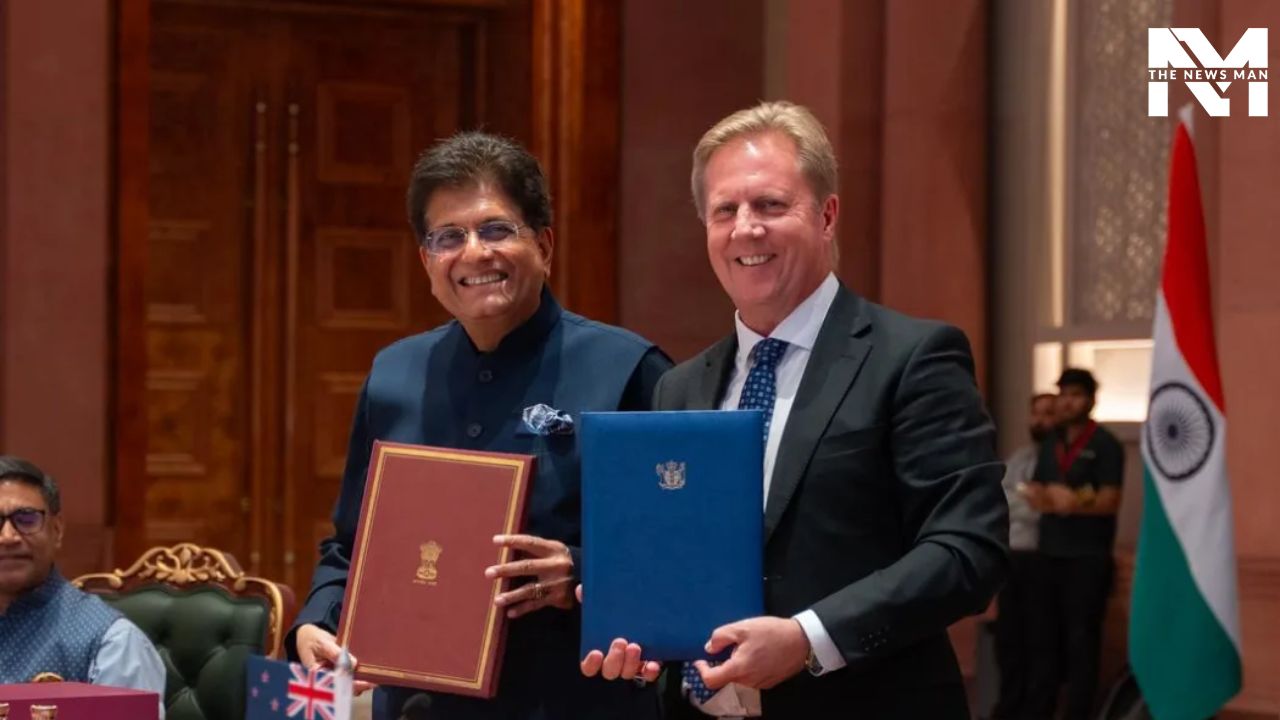
On April 27, 2026, the New Zealand Trade Minister Todd McClay and Indian Commerce Minister Piyush Goyal signed a landmark Free Trade Agreement (FTA) at Bharat Mandapam, New Delhi. The agreement, hailed as “once in a generation” by the Government, was signed on Monday night in the presence of New Zealand Prime Minister Christopher Luxon and business leaders from both nations. The two-way trade between New Zealand and India is currently valued at about NZ$3.95 billion.
The benefits of this FTA are widespread across both nations. Whether it is about reducing tariffs, opening doors of opportunity for professionals, boosting economic growth, or doubling export value, the deal promises to benefit a variety of sectors.
Last year, the deal was concluded in December, and the signing triggered the domestic ratification process. The Free Trade Agreement text and a National Interest Analysis were expected to be tabled in Parliament on Tuesday and referred to the Foreign Affairs, Defence and Trade Committee for public and parliamentary scrutiny. Roll your eyes over to know everything about India and New Zealand’s Free Trade Agreement.
India and New Zealand Sign Free Trade Agreement: Here’s What You Need to Know!
Today marks a landmark moment in the India-New Zealand partnership! I am delighted that the India-New Zealand FTA signed today will add unprecedented momentum to our developmental partnership. It reflects the deep trust, shared values and ambition that bind our two nations.… https://t.co/WBHn4gb1yB — Narendra Modi (@narendramodi) April 27, 2026
- Eliminate Or Reduce Tariffs
The deal aims to eliminate or reduce tariffs on 95 percent of New Zealand exports to India once fully implemented. Almost 57 percent of exports will become duty-free immediately, rising to 82 percent over time. The remaining exports will face reduced tariffs. Immediate tariff elimination will apply to exports, including sheep meat, wool, food, horticulture, coal, wine, mānuka honey, and some dairy products, and 95 percent of forestry and wood products.
- Horticultural Products: Apples and kiwifruit will gain expanded quota access and tariff reductions.
- Wines: Tariffs on wine are scheduled to fall from rates as high as 150 percent to between 25 and 50 percent over 10 years.
- Mānuka Honey: Tariffs will be reduced from 66 percent to 16.5 percent over five years.
- Milk Products: Some dairy products, including ingredients for re-export and bulk infant formula, will receive duty-free access immediately or over time, subject to quota.
- Open Doors of Opportunities
The deal will deliver thousands of jobs and billions of dollars in additional exports. It will open doors of opportunities for NZ businesses to diversify and create strong trading relationships, providing economic security for New Zealanders.
- Duty Free Access
Duty-free access will apply immediately to products including lamb, wool, coal, leather, and most forestry and industrial goods. Duty-free access for seafood products such as mussels and salmon will be phased in over seven years, while some industrial products will transition over up to 10 years.
- Opens Mobility Pathways
Commenting on the FTA, Agneshwar Sen, Trade Policy leader, EY India, stated that the agreement opens mobility pathways for Indian professionals in IT, healthcare, engineering, and education, while a dedicated fast-track arrangement allows Indian food processors to import New Zealand ingredients duty-free for processing and re-export – directly supporting India’s ambition to become a Global Food Hub.
- Trade Growth Target
The pact aims to double bilateral trade to about $5 billion over the next five years — a significant expansion from current levels.
- Investment and Capital Flows
New Zealand has committed to invest up to $20 billion in India over the next 15 years, according to government statements. This investment is expected across sectors, including services, manufacturing, and technology.
Once implemented, the India and New Zealand Free Trade Agreement will reshape trade, boost goods and services exchange, and deepen ties between the two economies.
Read Latest News and Breaking News at The Newsman, Browse for more World News