From Training to Trust: A Report Card on the BMC–FSSAI Street-Food Hygiene MOU

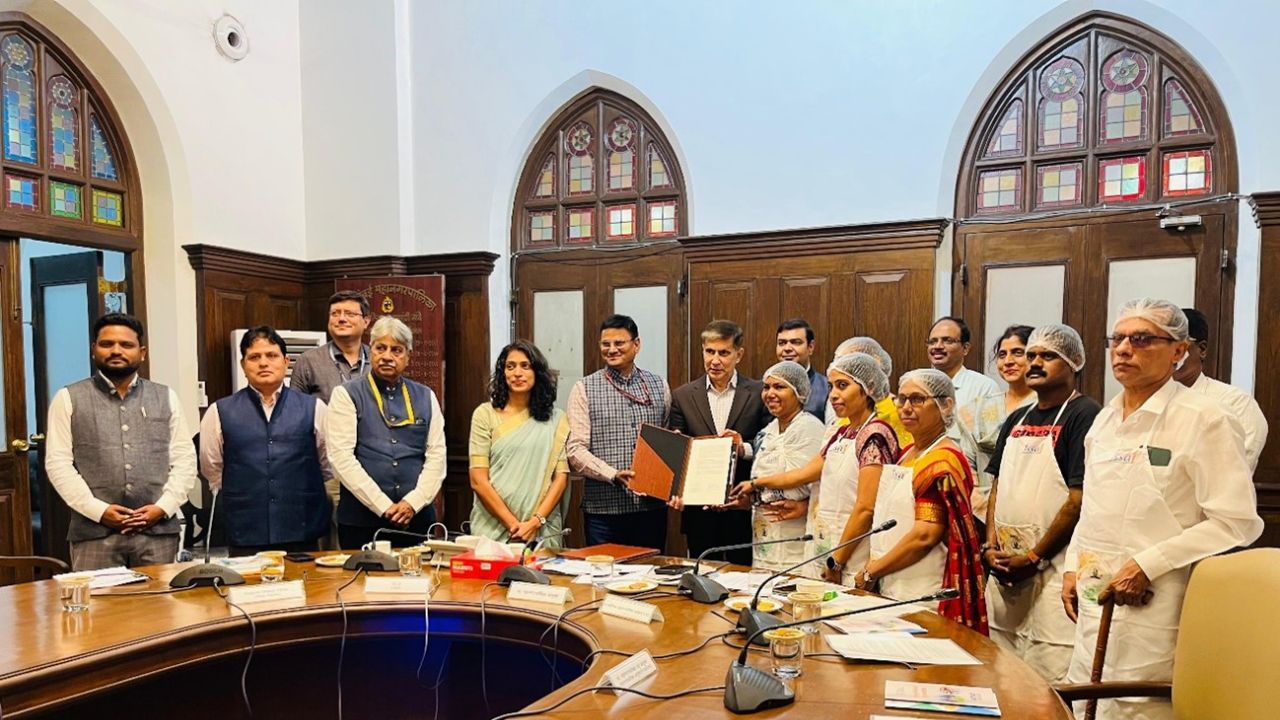
The Brihanmumbai Municipal Corporation (BMC) and the Food Safety and Standards Authority of India (FSSAI) signed a Memorandum of Understanding to Improve street-food hygiene through structured training and on 24th December 2024.
Now, nearly a year later and with BMC elections approaching, the MoU offers a useful baseline against which to assess whether food-safety reform in the city is designed as a durable system or a temporary administrative push.
Street food, for all its visibility, has rarely featured prominently in Mumbai’s civic campaigns. Yet it intersects directly with public health, livelihoods and everyday governance. This report card examines what the agreement sets out to do and what remains unresolved.
Training: Structured, Ongoing — but Still a System in Progress
At the core of the BMC–FSSAI agreement is a commitment to large-scale vendor training. Under the Food Safety Training and Certification (FoSTaC) programme, the two bodies aim to train 10,000 street-food vendors across Mumbai, focusing on personal hygiene, safe food handling, storage practices and contamination prevention.
According to official data, multiple training sessions have already been conducted since the signing of the MoU, with thousands of vendors covered through structured modules delivered jointly by FSSAI and the BMC. A joint coordination mechanism has also been put in place to oversee implementation.
This marks a clear shift away from an enforcement-first model toward capacity-building — a notable change in the city’s approach to food regulation.
Yet questions remain about scale and integration. While training is ongoing, the challenge lies in ensuring that it is evenly distributed across wards, periodically reinforced, and meaningfully linked to everyday vending conditions. As elections draw closer, the issue is less about whether training exists, and more about whether it is embedded into ward-level systems that can sustain standards beyond programme timelines and political cycles.
Infrastructure: The Unaddressed Constraint
Food hygiene standards depend heavily on access to basic civic infrastructure — clean water, waste disposal and sanitation facilities. On this front, the MoU remains largely silent.
In many parts of Mumbai, vendors continue to operate in areas without designated water points or organised garbage collection. Expecting consistent hygiene under such conditions places the burden of reform almost entirely on individual vendors, rather than on the civic systems that shape their working environment.
The absence of explicit infrastructure commitments highlights a familiar gap in urban governance: standards are articulated and training is delivered, but the enabling conditions required to meet those standards are uneven. As voters prepare to evaluate civic leadership, this gap may prove as consequential as any promise made.
Monitoring: Coordination Without Full Visibility
The agreement emphasises closer coordination between the BMC and FSSAI, signalling an effort to streamline food-safety oversight and avoid overlapping jurisdictions. However, public details on how monitoring will function at the ward level remain limited.
Monitoring frameworks determine whether reforms are experienced as supportive or punitive. Transparent standards, predictable inspections and proportionate responses are essential to building trust among vendors and consumers alike. Without clearly articulated monitoring processes, even structured training initiatives risk being undermined by uncertainty in enforcement.
Election periods often intensify inspection activity. Whether the MoU leads to consistent, system-driven oversight or episodic enforcement pushes remains a key question.
Public Awareness: The Missing Stakeholder
While the agreement places strong emphasis on institutional collaboration and vendor training, public awareness receives comparatively little attention.
Consumers play a central role in shaping food-safety outcomes, yet they are rarely positioned as active participants in hygiene reform. Clear information on basic safety indicators, visible hygiene markers, and accessible grievance mechanisms could help create shared accountability between vendors, regulators and the public.
In the absence of such measures, responsibility remains narrowly defined, limiting the broader behavioural shift that sustained reform requires.
A Baseline Before the Ballot
As Mumbai moves toward BMC elections, the December 2024 MoU stands as more than a policy announcement, it is a reference point. Training targets have been set, sessions have been conducted, and institutional coordination has begun. What remains to be seen is whether these efforts mature into a citywide system that aligns training with infrastructure, monitoring with transparency, and regulation with public trust.
For voters, the question is not whether clean street food is a desirable goal it is whether civic governance is prepared to support it in practice. In a city where governance is often judged through daily experience, the condition of street-food hygiene may yet become a quiet but telling measure of municipal performance.
Read Latest News and Breaking News at The Newsman, Browse for more Politics News