Why UGC’s New Equity Regulations Are Facing Nationwide Controversy?

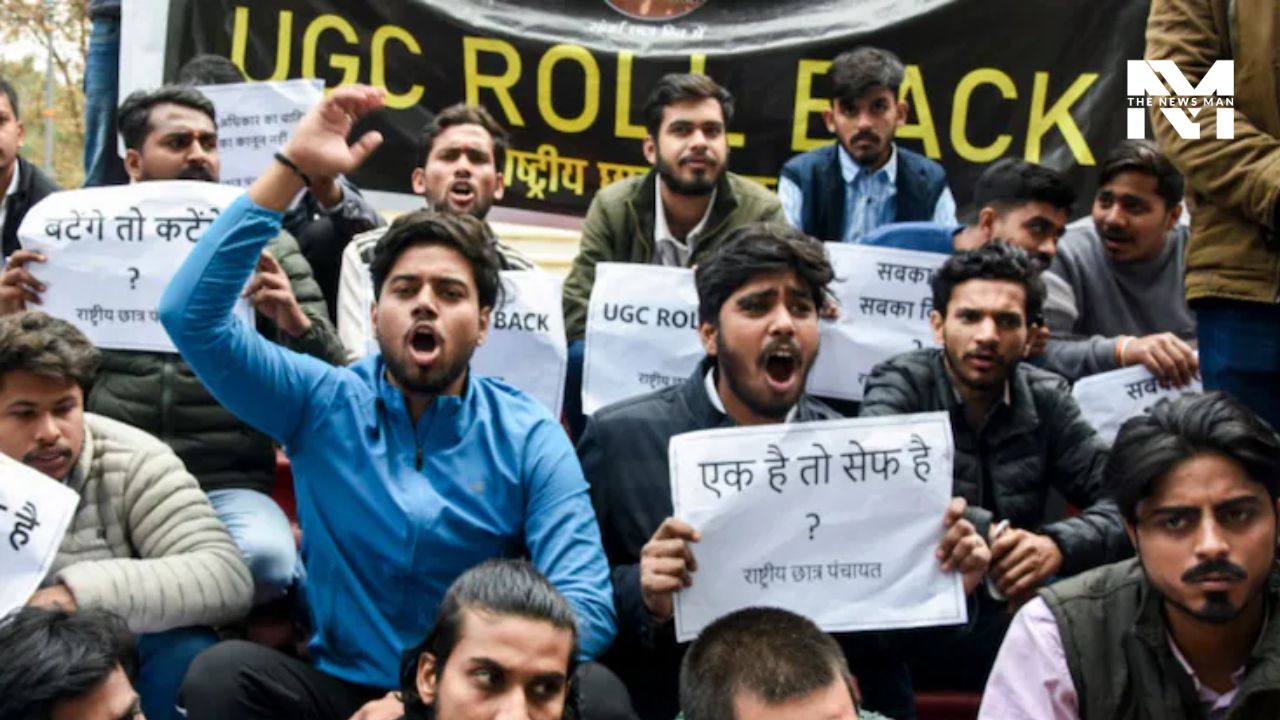
The University Grants Commission’s Equality Promotion Regulations in Higher Educational Institutions, 2026, have been welcomed by supporters as a major step towards social justice, but have also drawn strong opposition from several upper-caste organisations across the country.
The controversy has taken on political overtones, particularly with the Uttar Pradesh Assembly elections due in 2027, turning what was intended as an academic reform into a broader ideological flashpoint.
What Are the New Regulations?
The University Grants Commission (UGC), India’s apex body for regulating higher education, notified the new rules on January 15, 2026. According to the UGC, the regulations aim to curb caste-based discrimination on campuses and ensure a safe, dignified, and inclusive environment for students, faculty, and non-teaching staff.
A key change introduced by the regulations is the explicit inclusion of Other Backward Classes (OBCs) within the definition of caste-based discrimination. Earlier, institutional mechanisms primarily addressed complaints from Scheduled Castes (SCs) and Scheduled Tribes (STs). Under the new framework, OBC students and employees are formally empowered to file discrimination and harassment complaints, something the UGC describes as a correction reflecting ground realities.
Structural Changes Mandated
The regulations require every higher education institution to establish an Equal Opportunity Cell catering to SC, ST, and OBC communities. In addition, universities must constitute an Equality Committee with representation from OBCs, women, SCs, STs, and persons with disabilities.
These committees are mandated to submit reports to the UGC every six months, a move the regulator says will improve transparency, monitoring, and institutional accountability.
Why Is There Opposition?
Opposition to the regulations surfaced soon after they were notified. Several upper-caste organisations argue that the provisions are open to misuse and could lead to false complaints against students and faculty from their communities.
In Jaipur, groups including the Karni Sena, Brahmin Mahasabha, Kayastha Mahasabha, and various Vaishya organisations have united under the banner of the Savarna Samaj Coordination Committee (S-4) to oppose the rules.
The issue has been especially volatile in Uttar Pradesh. Yati Narasimhanand Giri, head of Dasna Peeth in Ghaziabad, announced plans for a hunger strike at Jantar Mantar in Delhi to protest the regulations. He was stopped by the police and placed under house arrest, after which he accused the Yogi Adityanath-led government of suppressing upper-caste voices, further escalating tensions.
The debate has also intensified online. Several upper-caste YouTubers and influencers have described the regulations as “anti-upper caste”, while a video by Swami Anand Swaroop calling for unity among upper-caste groups went viral.
On the other hand, social justice advocates have defended the regulations as a long-overdue reform aimed at ensuring dignity and equal opportunity within educational institutions.
What Does the Data Say?
The UGC has cited official data to support its position. Figures submitted to Parliament and the Supreme Court show that complaints of caste discrimination in higher education have risen by 118.4% over the past five years.
While 173 complaints were recorded in 2019–20, the number rose to 378 in 2023–24. In total, 1,160 complaints were received from 704 universities and 1,553 colleges during this period. The UGC argues that these numbers highlight persistent discrimination and the need for stronger institutional safeguards.
Read Latest News and Breaking News at The Newsman, Browse for more India News