From Burning Cars to a 21% Pay Hike: Decoding the Noida Factory Workers’ Protest


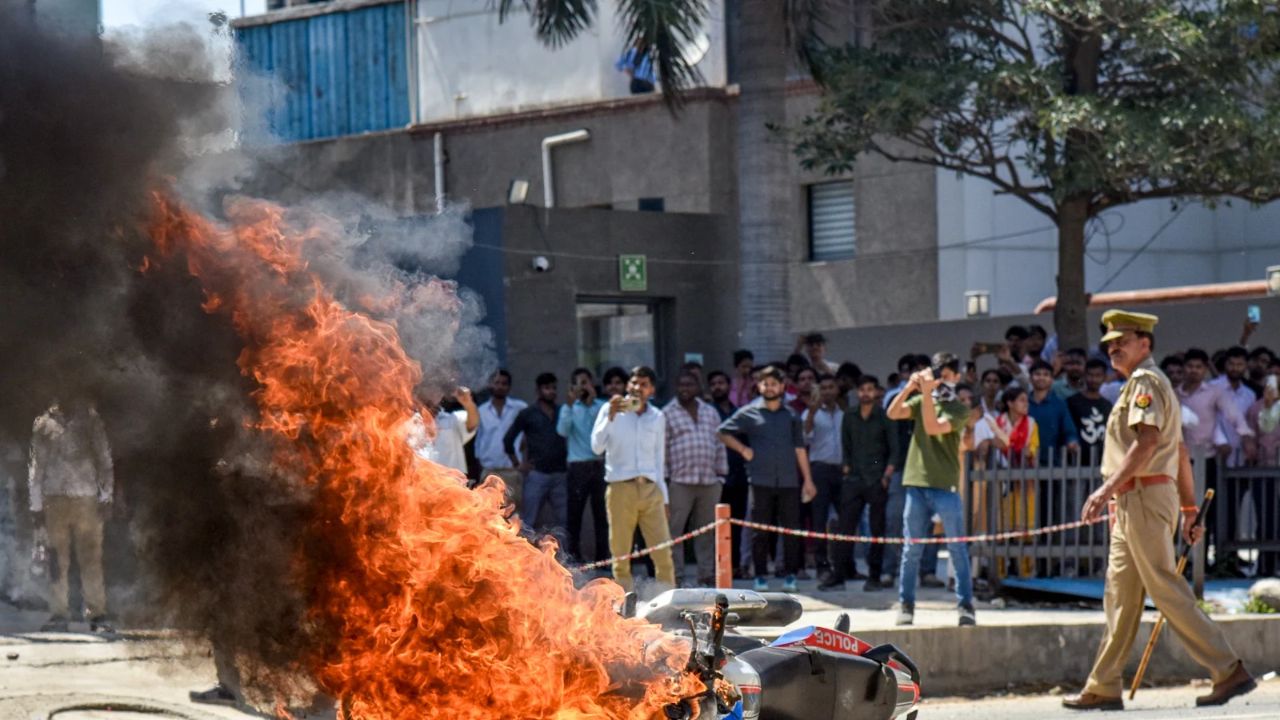
Cars torched, roads blocked, and thousands of workers facing off against riot police—Noida witnessed massive unrest this week as factory workers took to the streets. What started as murmurs of dissatisfaction quickly snowballed into a massive agitation across the industrial hubs of Noida.
But what exactly drove these workers to the edge, and how has the Uttar Pradesh government responded? Here is a breakdown of the crisis.
Why Are the Workers Protesting in Noida?
The crux of the agitation lies in a severe cost-of-living crisis combined with gruelling working conditions. The workers laid out clear demands before the authorities:
- The Rs 20,000 Demand: Most protesting workers reported making under Rs 15,000 a month, with some earning just Rs 300-400 a day. Driven by the rising costs of cooking gas, rent, and school fees, they demanded a baseline minimum wage of Rs 20,000 per month to make ends meet.
- End to 12-Hour Shifts: A major grievance was the exhausting work schedule. The workers demanded a strict transition from 12-hour shifts to standard 8-hour shifts.
Fair Workplace Practices: Alongside base pay, workers protested for regulated overtime pay, timely meals, weekly holiday bonuses, and better safety measures for women on the factory floor. - The ‘Haryana’ Factor: The Spark that Lit the Fire
While economic distress laid the groundwork, the immediate trigger for the Noida protests came from across the border.
Recently, the Nayab Singh Saini-led government in neighbouring Haryana announced a massive 35% hike in minimum wages across all categories. Under Haryana’s new rules, an unskilled worker will earn at least Rs 15,220 a month, and a semi-skilled worker will get Rs 16,780.
Noida’s workers felt deeply short-changed, questioning why they should endure harder working conditions for significantly less pay while doing the exact same jobs as their counterparts just miles away. Furthermore, they alleged that their current employers were flouting even the baseline minimum wages prescribed by the central government.
How Did the UP Government Respond?
Following the violent clashes, the Yogi Adityanath-led Uttar Pradesh government stepped in to defuse the tension. While the state explicitly rejected the workers’ claims that the minimum wage had been raised to Rs 20,000, it did announce an immediate interim hike of up to 21% effective from April 1.
“Currently, the industry is facing global and economic challenges. The prices of raw materials for industries have increased, and exports have declined. Furthermore, the problems and demands raised by workers are relevant, important, and worth considering. In such a situation, it is crucial to adopt a harmonious and balanced approach between both parties — industry and workers — to reach a decision,” the state government said.
The state has tiered this wage hike geographically:
Noida and Ghaziabad (21% Hike): As the epicenter of the protests, this region sees the highest baseline. Unskilled workers will now earn Rs 13,690 (up from Rs 11,313), semi-skilled workers will get Rs 15,059, and skilled workers will receive Rs 16,868 a month.
Other Municipal Corporation Areas (15% Hike): Unskilled workers here will receive Rs 13,006, semi-skilled Rs 14,306, and skilled Rs 16,025.
Remaining Districts (9% Hike): In the rest of the state, unskilled workers will make Rs 12,356, semi-skilled Rs 13,591, and skilled Rs 15,224.
While this interim relief has been rolled out, the UP government noted that a formal Wage Board will be constituted next month to look into a more permanent revision of the minimum wage in consultation with all stakeholders
Read Latest News and Breaking News at The Newsman, Browse for more India News