A Historic Turn in Global Trade: India and the EU Seal the “Mother of All Deals”


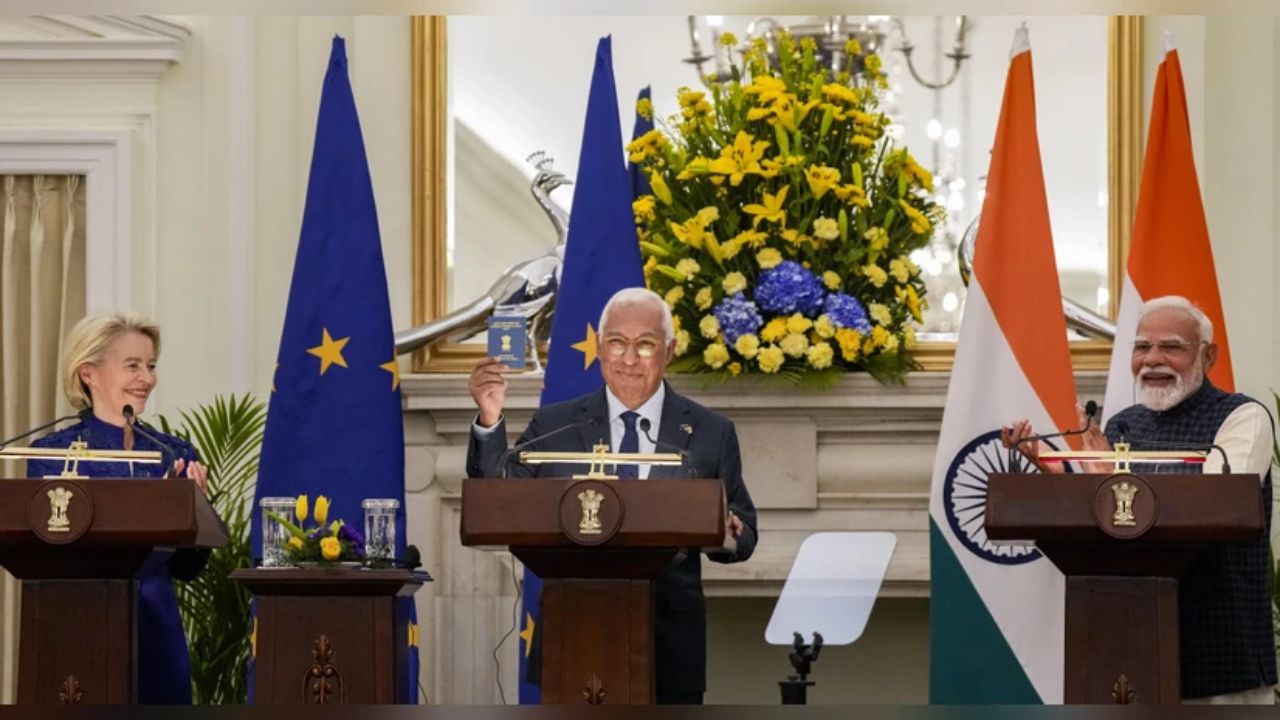
After nearly two decades of negotiation, India and the European Union have concluded a landmark free trade agreement (FTA) that redefines one of the world’s most consequential commercial relationships. Hailed by leaders on both sides as the “mother of all deals,” the pact brings together a market of roughly 2 billion people, accounting for about 25 % of global GDP and one-third of world trade.
Signed in New Delhi in the presence of Prime Minister Narendra Modi and European Commission President Ursula von der Leyen, the agreement marks a historic reset in bilateral economic ties that have long been constrained by high tariffs and regulatory barriers.
Ambitious Tariff Reductions and Market Access
At its core, the deal slashes or eliminates import duties on the vast majority of traded goods. India has agreed to reduce tariffs on about 96.6 % of EU exports by value, delivering annual duty savings estimated at €4 billion. In return, the EU will phase out tariffs on an equally broad swath of Indian products, offering preferential access to one of the world’s fastest-growing large markets.
Among the most notable changes
Automobiles: India will progressively cut tariffs on European cars, from current peaks near 110 % to rates as low as 10 % under a quota of roughly 250,000 vehicles annually — a concession unprecedented in India’s trade history.
Industrial Goods: Duties on machinery, chemicals, pharmaceuticals and electrical equipment, often exceeding 20 – 40 %, are set to be phased out, lowering costs for European suppliers and potentially for Indian consumers and industries reliant on imported inputs.
Agrifood and Consumer Items: Tariffs on wine, olive oil and processed foods will be reduced significantly over time, though some sensitive agricultural categories — dairy, cereals and certain staples — remain shielded to protect domestic producers.
Beyond Goods: Services, Mobility and Sustainability
The agreement does not stop at tariffs. It opens new ground in services and regulatory cooperation. European firms gain deeper access to India’s financial, maritime and professional services markets, while both sides commit to streamlined customs procedures and stronger intellectual property protections.
A notable addition is the pact’s sustainability component: legally binding commitments on environmental protection and labor standards and a framework for climate cooperation, including a planned €500 million EU fund to support India’s transition to greener technologies.
Economic Impacts and Strategic Significance
For India, the agreement promises to bolster manufacturing and export competitiveness, particularly in labour-intensive sectors such as textiles, leather, gems and jewellery, and engineering goods — industries that have historically faced tariff disadvantages in the European market.
The EU, meanwhile, gains unfettered access to a consumer market of 1.45 billion people — a boon for industries ranging from automotive and machinery to pharma and luxury goods. Tariff cuts are expected to double EU exports to India by the early 2030s, a significant shift in a relationship long marked by protectionist barriers.
Strategically, the agreement emerges at a time of rising global trade uncertainty. With protectionist pressures high in major economies and supply-chain realignments accelerating, the India-EU deal signals a recommitment to rules-based multilateralism and economic integration beyond traditional blocs.
Despite broad enthusiasm, the agreement is not without contention. Sensitive sectors — particularly agriculture — were exempted from liberalisation to cushion political and social concerns in both regions. Similarly, phased rollouts of tariff cuts and quotas reflect a negotiated balance between opening markets and protecting nascent or vulnerable domestic industries.
The pact still requires ratification by the European Parliament, EU member states and the Indian Parliament before taking full effect, a procedural hurdle that could shape its final contours.
Read Latest News and Breaking News at The Newsman, Browse for more Business News